What is JKD Philosophy History Techniques Instructors Membership Books Bruce Lee Games Jade Lin — Coming Soon
Jeet Kune Do World Council Presents

JEET
KUNE DO
ONLINE

The Way of the Intercepting Fist

The world's premier free educational resource for Jeet Kune Do — Bruce Lee's revolutionary martial art. No cost. No barriers. Knowledge for everyone.

✦ 100% Free — Always — For Everyone ✦
Jeet Kune Do World Council
Scroll
"Using no way as way, having no limitation as limitation."
— Bruce Lee

Core principle of Jeet Kune Do, from Bruce Lee's personal writings and teachings

What Is
Jeet Kune Do?

Jeet Kune Do — literally translated as "The Way of the Intercepting Fist" — is the martial art and philosophy forged by Bruce Lee beginning in 1965, following his legendary fight with Wong Jack Man in Oakland, California. That fight changed everything. Bruce Lee realized that traditional martial arts had failed him, and he began dismantling everything he knew to build something entirely new. The name "Jeet Kune Do" was formally coined in 1967, when Bruce Lee consulted a linguist to give language to what he had already been creating for two years. It is not a fixed system. It is a concept, a methodology, a way of thinking about combat and about life itself.

Unlike traditional martial arts that adhere to rigid forms and stylistic boundaries, JKD embraces what works. It draws from Wing Chun, boxing, fencing, wrestling, and dozens of other disciplines — taking what is useful, discarding what is not, and adding what is uniquely your own. But here is what separates real JKD from the imitation: full resistance training. You cannot learn to fight without fighting. You cannot test a technique without a resisting opponent. The JKDWC holds this as non-negotiable.

At its highest level, Jeet Kune Do transcends fighting. It becomes a philosophy of self-knowledge, adaptability, and the relentless pursuit of truth — in combat and in life. Bruce Lee described it as "a finger pointing at the moon." The finger is not the moon. Do not mistake the art for the truth it points toward.

This website exists to make that knowledge freely available to every person on earth — regardless of where they live, what they can afford, or who their instructor is. No gatekeeping. No fees. Just the truth of the art.

1965
Year JKD was born
(Name coined 1967)
30+
Countries with JKD practitioners
100%
Full Resistance Required
JKDWC Official Seal

The Philosophy of
Jeet Kune Do

JKD is built on three foundational principles that Bruce Lee described as the essence of the art. These are not rules — they are a way of seeing.

Simplicity

The most efficient path between two points is a straight line. JKD strips away the ornamental and the theatrical, leaving only what works. Every technique must justify its existence through effectiveness, not tradition.

🎯

Directness

Attack the closest target by the most direct route. There is no wasted motion, no telegraphing, no preparation. The strike and the thought are one. This is the intercepting nature of the art — meeting force before it arrives.

💧

Non-Classical Freedom

"Be like water." Water has no fixed form. It adapts to its container, flows around obstacles, and when given force, becomes unstoppable. JKD practitioners are not bound by style — they are free to use what the moment demands.

🔄

Intercepting

The "Jeet" in Jeet Kune Do means to intercept. This is not merely a physical concept — it is a mental one. The highest level of JKD is to intercept the opponent's intent before their body moves. Awareness precedes action.

🧠

Empty Mind

Bruce Lee drew deeply from Zen philosophy. The concept of "mushin" — empty mind — is central to JKD. A mind cluttered with thought cannot respond freely. The practitioner must empty themselves to become fully present.

🌊

Absorb & Adapt

"Absorb what is useful, discard what is not, add what is uniquely your own." This is the living heart of JKD. It is not a museum piece. It evolves with every practitioner who takes it seriously and applies it honestly.

🥊

Full Resistance — Non-Negotiable

JKD without sparring is not JKD. It is choreography. The JKDWC holds full-resistance training as a core requirement — not an advanced option. Every technique must be tested against someone who is genuinely trying to stop you. That is where the art lives. Everything else is theory.

"True mastery transcends any particular art. It stems from mastery of oneself — the ability, developed through self-discipline, to be calm, fully aware, and completely in tune with oneself and the surroundings."
— Bruce Lee

From Bruce Lee's personal essay on Jeet Kune Do

The History of
Jeet Kune Do

1940

Bruce Lee Begins Training

Bruce Lee begins studying Wing Chun Kung Fu under the legendary Ip Man in Hong Kong at age 13. This foundational training in simultaneous attack and defense would shape JKD's core structure.

1959

Arrival in America

Bruce Lee moves to the United States, eventually settling in Seattle. He begins teaching martial arts and studying philosophy at the University of Washington, where his ideas begin to evolve beyond Wing Chun.

1963

The Oakland Connection — James Yimm Lee

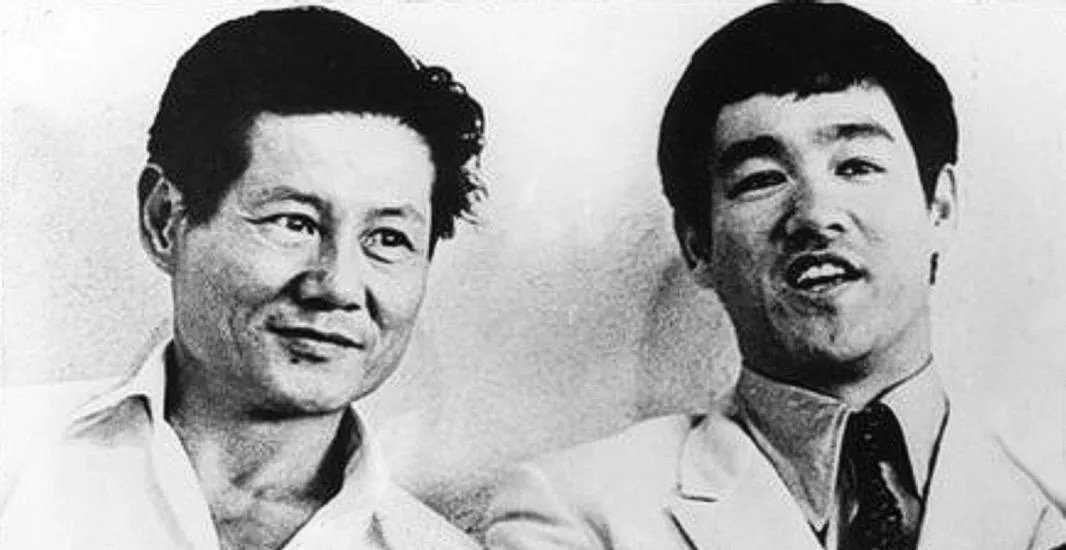
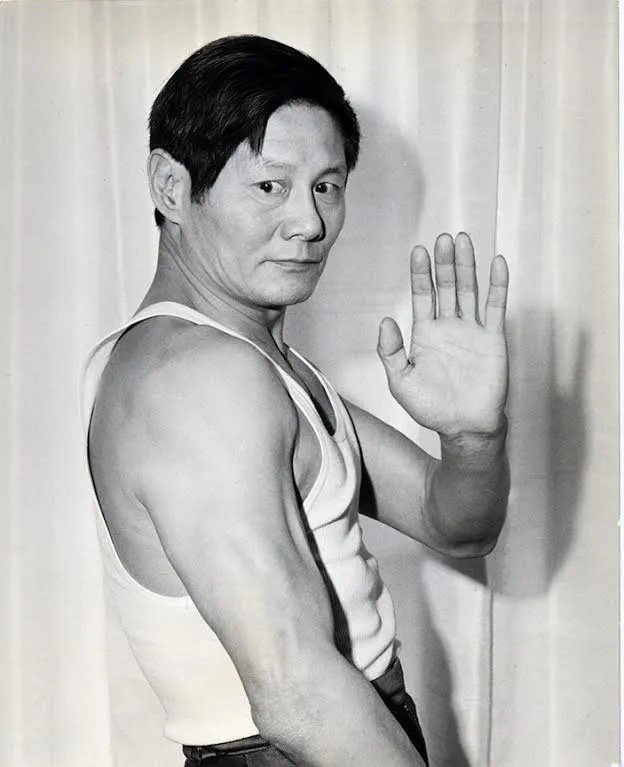
Bruce Lee meets James Yimm Lee in Oakland, California — a pivotal collaboration that would directly shape the development of Jeet Kune Do. James Lee's contributions as a co-creator of the art have been documented in The Co-Creation of Jeet Kune Do by Richard Vigslist and Gary Dill.

1965

The Art is Born — After Wong Jack Man

Following his private fight with Wong Jack Man in Oakland, Bruce Lee undergoes a profound reckoning. Traditional martial arts had failed him. He begins dismantling everything — forms, styles, limitations — and forging a new approach to combat rooted in directness, economy of motion, and truth. This is the true birth year of Jeet Kune Do. The name would come later.

1967

The Name is Coined

Bruce Lee consults a linguist to give a name to what he had already been creating for two years. "Jeet Kune Do" — The Way of the Intercepting Fist — is formally coined. He opens the Los Angeles Chinatown school. JKD is declared a concept, not a style. Among those who witnessed this era firsthand was Leo Fong — martial artist, actor, and close associate of Bruce Lee — whose accounts confirm the timeline of the art's development.

1973

Bruce Lee's Passing

Bruce Lee passes away on July 20, 1973, at age 32. His legacy is immeasurable. His notebooks — compiled posthumously into Tao of Jeet Kune Do — become one of the most important martial arts texts ever published.

1996–Present

Richard Vigslist Begins His Journey

Beginning in 1996, Richard Vigslist begins his formal JKD journey. His primary instructor is Gary Dill, under whom he trains for over 15 years. Over the years he has had contact with many of the art's most respected figures — including Ted Wong, Richard Bustillo, Tim Tackett, and Leo Fong. He also corresponded personally with Joe Lewis during the final year of Lewis's life, during which Lewis shared materials from his work with Bruce Lee. Richard goes on to teach internationally, with seminars in India and across the USA.

Today

Jeet Kune Do World Council

The JKDWC carries the art forward with a global team of verified instructors across the USA and India. JeetKuneDo.online launches as the world's first completely free, comprehensive JKD educational resource — open to all.

JKD Techniques
& Training Concepts

These are the foundational concepts of JKD training. Full instructional content, video breakdowns, and in-depth technique analysis are coming to this site. This is just the beginning.

01

The On-Guard Position (Bai-Jong)

The JKD fighting stance is the foundation of everything. Unlike traditional stances, the Bai-Jong is mobile, balanced, and deceptive — with the strong hand and foot forward. It minimizes target exposure while maximizing striking efficiency.

02

The Five Ways of Attack

JKD organizes all offensive action into five categories: Single Direct Attack (SDA), Attack by Combination (ABC), Progressive Indirect Attack (PIA), Hand Immobilization Attack (HIA), and Attack by Drawing (ABD). Mastery of these five opens every door in combat.

03

Footwork & Economy of Motion

JKD footwork is derived from Western boxing and fencing. The practitioner maintains constant mobility, using the "push-step" and "slide-step" to close distance, create angles, and evade. Every movement serves a purpose — nothing is wasted.

04

Trapping Hands (Chi Sao)

Inherited from Wing Chun, trapping is the art of controlling the opponent's limbs to create openings. In JKD, trapping is not a system unto itself — it is a bridge between ranges, used fluidly as the situation demands.

05

The Stop Hit & Interception

The defining technique of JKD. Rather than blocking and then countering — two movements — the stop hit intercepts the opponent's attack with a simultaneous strike. One motion. Defense and offense become one. This is the "Jeet" of Jeet Kune Do.

06

Ranges of Combat

JKD recognizes four primary ranges: kicking range, punching range, trapping range, and grappling range. The complete JKD practitioner is dangerous at all four — and knows how to transition between them without hesitation or loss of position.

07

Sensitivity Training

Through drills like Chi Sao (sticky hands) and Lat Sao (free flow), JKD practitioners develop tactile sensitivity — the ability to read an opponent's intent through physical contact. This is the bridge between technique and instinct.

08

Alive Sparring & Full Resistance

This is where real JKD lives. Every technique must be tested against a fully resisting opponent — someone who is genuinely trying to stop you, hit you, and take you down. Forms and patterns are training tools, not the art itself. JKDWC instructors are required to spar. No exceptions. If you cannot handle pressure, you cannot teach this art.

Certified Instructors

The knowledge on this site is free — and always will be. But if you are serious about direct, hands-on instruction from a JKDWC-verified practitioner, the instructors below are available for private and group training. They set their own rates and schedules.

Every JKDWC instructor is required to spar. Full resistance. No exceptions. In the spirit of JKD itself: forget the paper. Can they handle their business? That is the only question that matters. These instructors can.

BC

Sifu Bonnis Chakraborty

Certified Full Instructor
🇮🇳 India
✦ JKDWC Verified

Available for private instruction and seminars across India. A skilled practitioner who has put in the work.

CG

Carlos Gonzalez

Certified Instructor
🇺🇸 USA
✦ JKDWC Verified

Available for instruction in the USA. Rates and availability set independently.

JH

Josh Horne

Certified Instructor
🇺🇸 USA
✦ JKDWC Verified

Available for instruction in the USA. Rates and availability set independently.

JS

Jason Sossoman

Certified Instructor
🇺🇸 USA
✦ JKDWC Verified

Available for instruction in the USA. Rates and availability set independently.

+

Expanding Worldwide

New Instructors Being Certified
🌍 Global
JKDWC Growing

The JKDWC instructor network is actively expanding. Serious practitioners may inquire about the certification path.

To inquire about instruction, contact the JKDWC directly at jkdwcinfo@gmail.com

Books on Jeet Kune Do

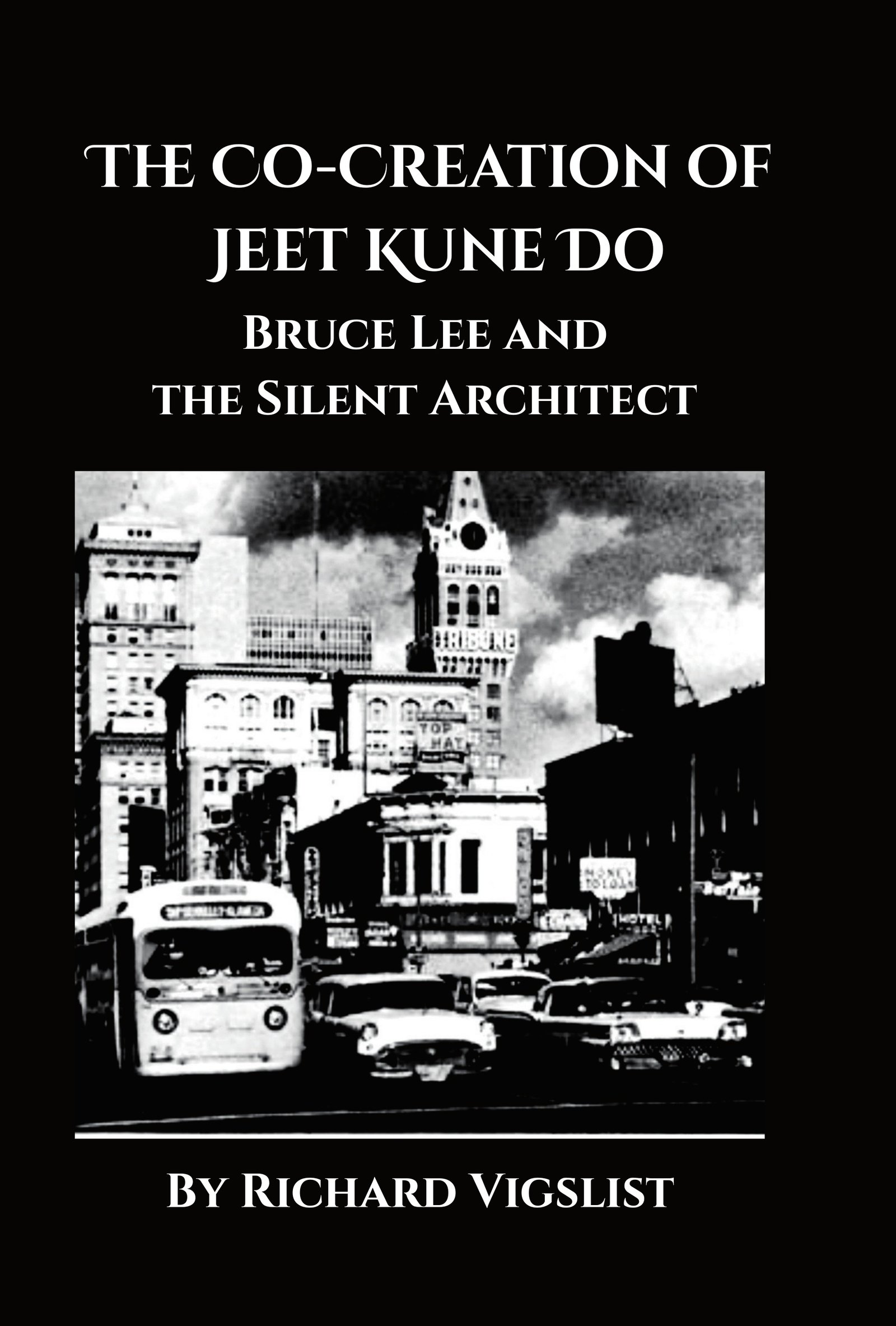
The Co-Creation of Jeet Kune Do

The Co-Creation of Jeet Kune Do

Bruce Lee and the Silent Architect
by Richard Vigslist & Gary Dill

The untold story of James Yimm Lee — the Oakland martial artist whose collaboration with Bruce Lee was instrumental in the development of Jeet Kune Do. A long-overdue recognition of a man whose influence has gone largely unacknowledged.

View on Amazon →
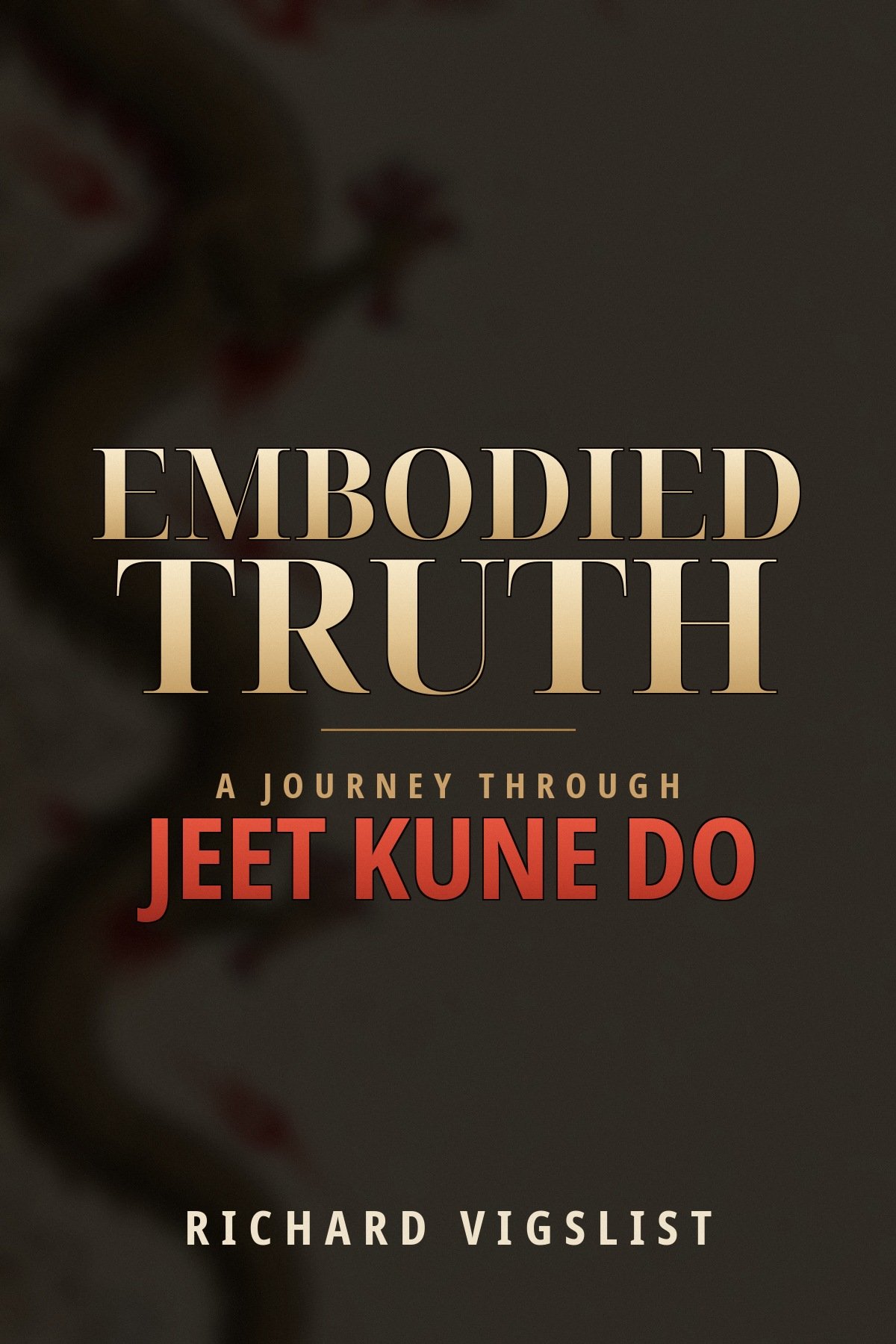
Embodied Truth — Coming Soon
Coming Soon

Embodied Truth

The Mastery Phase of Jeet Kune Do
by Richard Vigslist

The follow-up to The Co-Creation of Jeet Kune Do. This volume explores what it means to truly embody the art — not just know it intellectually, but live it. The mastery phase is not about more techniques. It is about less.

Releasing Soon
Jade Lin — Coming Soon
Coming Soon

Meet
Jade Lin

Something extraordinary is coming to JeetKuneDo.online. Jade Lin — an AI-powered JKD guide — will soon be available to answer your questions, walk you through techniques, and help you explore the philosophy of Jeet Kune Do at any hour, in any language.

Jade is not a chatbot. She is a dedicated JKD companion — trained on the principles, history, and philosophy of the art — designed to make world-class JKD education accessible to every person on earth who cannot access an instructor.

  • Ask any question about JKD philosophy, history, or technique
  • Interactive technique breakdowns and concept explanations
  • Available 24/7 — no seminar fees, no travel required
  • Multi-language support for the global JKD community
  • Guided learning paths for beginners through advanced practitioners

Be notified when Jade Lin goes live:

Bruce Lee —
The Founder

Official JKD Symbol
© Bruce Lee Family Company

Visit brucelee.com →
Disclaimer: JeetKuneDo.online and the Jeet Kune Do World Council are not affiliated with, endorsed by, or connected to the Bruce Lee Family Company, Shannon Lee, or brucelee.com. The JKD symbol is used here for educational purposes under fair use. We deeply respect and fully support the Bruce Lee estate and their mission to preserve his legacy.

Bruce Lee (November 27, 1940 – July 20, 1973) was a martial artist, philosopher, actor, filmmaker, and one of the most influential human beings of the 20th century. Born in San Francisco and raised in Hong Kong, he returned to America and changed the world's understanding of what martial arts could be.

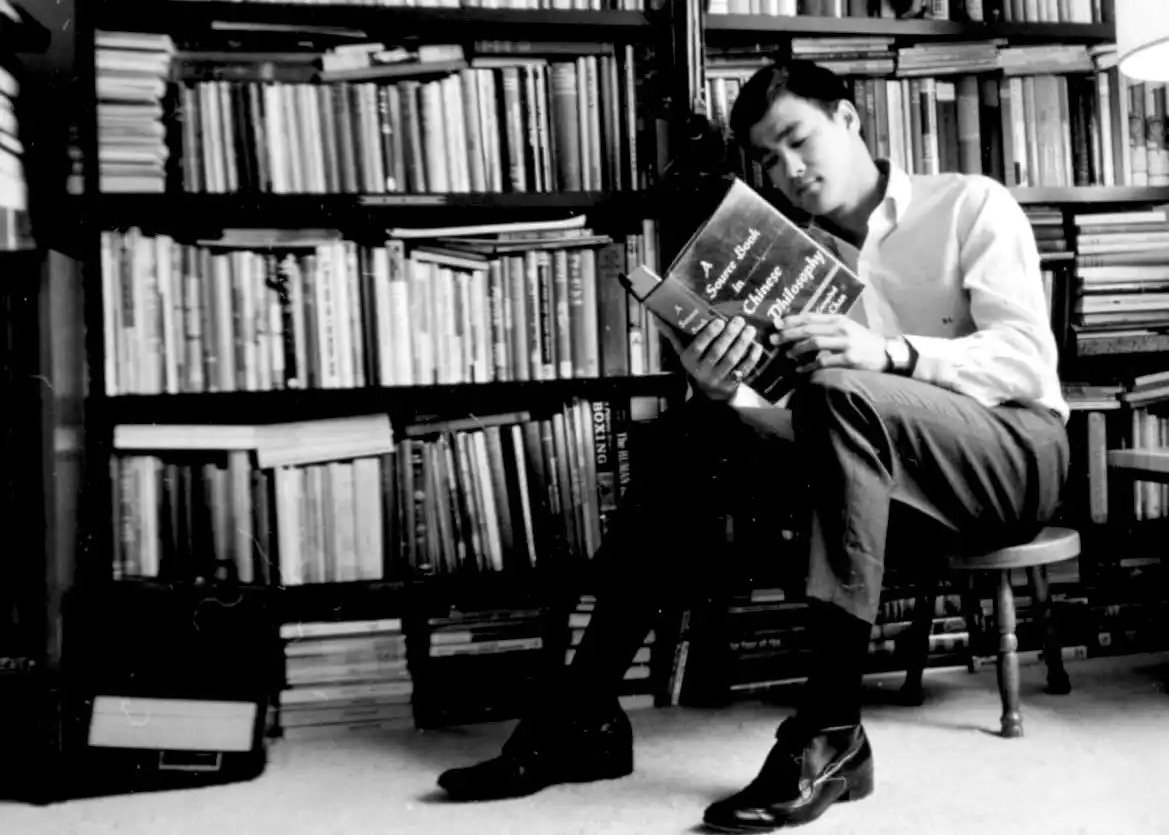
He was not merely a fighter. He was a thinker. He studied philosophy at the University of Washington. He read voraciously — from Krishnamurti to Zen Buddhism to Western boxing manuals. He synthesized everything he encountered into a living, breathing art that refused to be contained by tradition.

Jeet Kune Do was his greatest creation — not a style, but a philosophy of liberation. His daughter Shannon Lee and the Bruce Lee Foundation continue his legacy through education, scholarship, and the preservation of his writings and teachings.

Explore Bruce Lee's Philosophies →
"If you always put limits on everything you do, physical or anything else, it will spread into your work and into your life. There are no limits. There are only plateaus, and you must not stay there, you must go beyond them."
— Bruce Lee From Bruce Lee's personal writings and interviews
"Purposelessness, empty-mindedness, or no-art are frequent terms used in the orient to denote the ultimate achievement of a martial artist. The spirit is by nature formless and no objects are to be harbored in it."
— Bruce Lee From Bruce Lee's personal essay on Jeet Kune Do
"The consciousness of self is the greatest hindrance to the proper execution of all physical action. There is no opponent because the word 'I' does not exist."
— Bruce Lee From Bruce Lee's personal notes, compiled in Tao of Jeet Kune Do (posthumous, 1975)
"In every day life the mind is capable of moving from one thought or object to another — 'being' mind instead of 'having' mind. However, when face to face with an opponent in a deadly contest, the mind tends to stick and loses its mobility."
— Bruce Lee From Bruce Lee's personal essay on Jeet Kune Do

Note on sources: Tao of Jeet Kune Do (1975) was compiled from approximately seven of Bruce Lee's personal notebooks after his death. Some quotes circulating online are misattributed or paraphrased. All quotes on this site are sourced as carefully as possible and noted accordingly.

A Global Movement

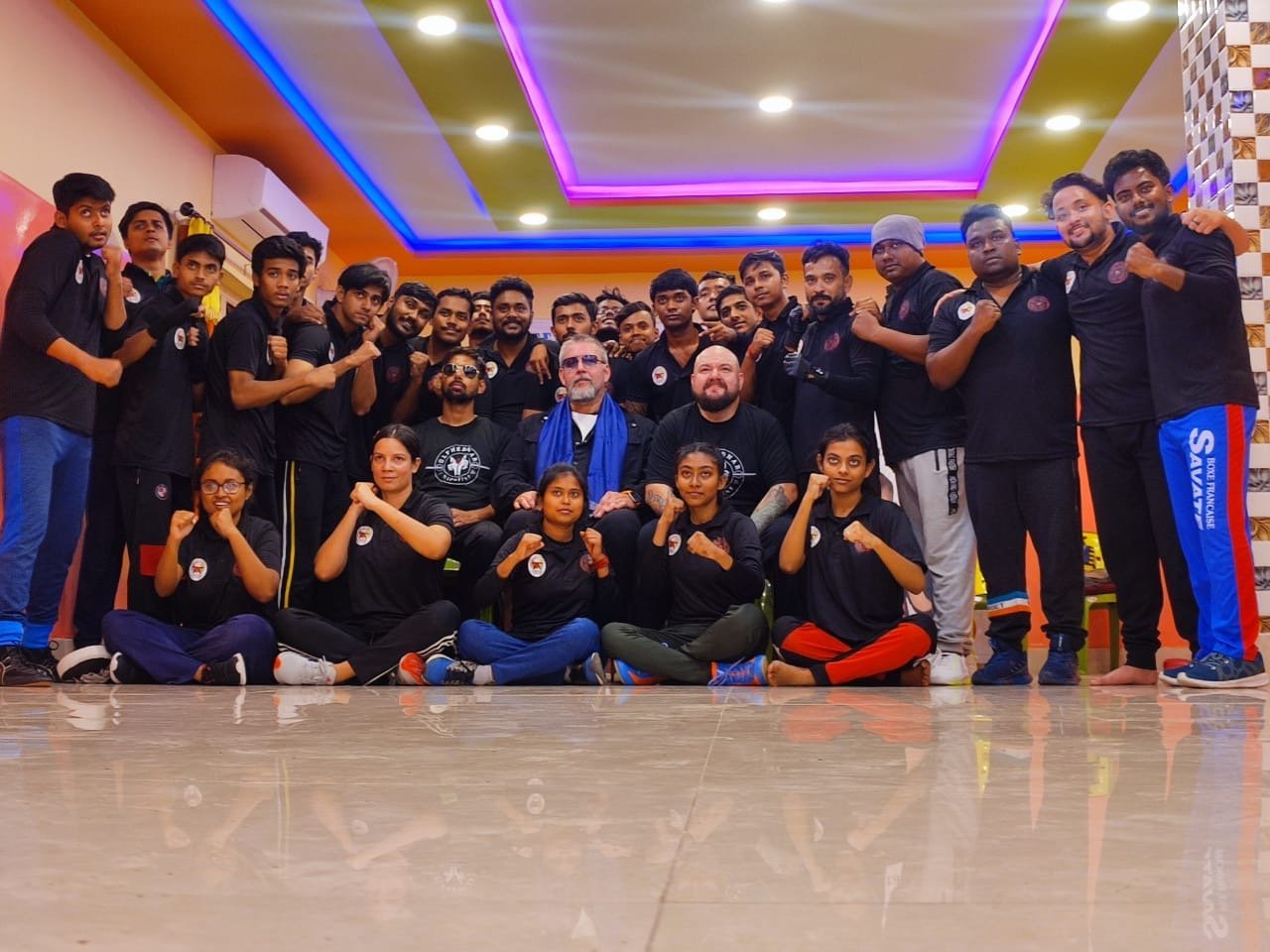
The JKDWC instructor network spans continents. Jeet Kune Do is not an American art or a Chinese art — it belongs to the world. Our mission is to ensure that a student in Mumbai has the same access to quality JKD education as a student in Los Angeles.

🇺🇸
United States
JKDWC Headquarters
Multiple certified instructors
🇮🇳
India
Indian Combat JKD Federation
Sifu Bonnis Chakraborty
🌍
Expanding
Active outreach across
Europe, Asia & Latin America
🌐
Online — Worldwide
Free education for
every person on earth
Richard Vigslist — JKDWC Founder

Richard Vigslist

Richard Vigslist has been training since age 5. Nearly three decades in Jeet Kune Do. A Brazilian Jiu-Jitsu black belt. A Muay Thai coach. A USA Boxing coach. He has studied, competed in, and taught multiple martial arts across the USA and internationally — including seminars in India. He built a global network of practitioners not by collecting certificates, but by showing up, sparring, and doing the work.

His primary JKD training was under Gary Dill, with whom he trained for over 15 years. Along the way he has had contact with many of the art's most respected figures — Ted Wong, Richard Bustillo, Tim Tackett, Leo Fong, and Joe Lewis, with whom he corresponded personally during Lewis's final year. What matters is not what any of that looks like on paper. What matters is what it produced.

Richard is the author of The Co-Creation of Jeet Kune Do: Bruce Lee and the Silent Architect — a book that gives long-overdue recognition to James Yimm Lee's role in the art's development. His forthcoming book, Embodied Truth, explores the mastery phase of JKD.

JeetKuneDo.online is his legacy project — a commitment to making the art he spent thousands of dollars and decades learning freely available to everyone who seeks it.

  • Training began 1996 — nearly 30 years in the art
  • Primary instructor: Gary Dill — 15+ years
  • Personal correspondence with Joe Lewis in his final year; Lewis shared materials from his work with Bruce Lee
  • Contact with Ted Wong, Richard Bustillo, Tim Tackett, Leo Fong
  • Brazilian Jiu-Jitsu Black Belt
  • Muay Thai Coach
  • USA Boxing Coach
  • International seminars conducted in India and the USA
  • Founder, Jeet Kune Do World Council
  • Author — two published works on JKD
Visit richardvigslist.com →

Classic Arcade Games

When you're not training, play. These classic arcade games are embedded here in the spirit of the era that shaped a generation of martial artists — the 1980s. Bruce Lee himself was a student of popular culture. Play on.

🥋
Bruce Lee (1984)
Classic C64 / DOS — Datasoft

The original 1984 Bruce Lee game — a classic platformer where you fight your way through chambers to claim the sorcerer's treasure. One of the greatest games of the 8-bit era.

Controls: Arrow Keys to move · Ctrl to kick · Alt to punch
Play Now →
🐉
Dragon: The Bruce Lee Story
SNES (1994) — Universal Interactive

Based on the 1993 biographical film, this SNES fighting game follows Bruce Lee's life story. A beloved classic from the golden age of 16-bit gaming — and a tribute to the man himself.

Controls: Arrow Keys to move · Z/X/C to attack · Enter start
Play Now →
⚔️
Bruce Lee: Return of the Legend
GBA (2003) — Vivendi Universal

A Game Boy Advance action game featuring Bruce Lee in a side-scrolling beat 'em up. Fight through waves of enemies using JKD-inspired combat in this tribute to the legend.

Controls: Arrow Keys to move · Z to attack · X to jump · Enter start
Play Now →

Games open in new tabs via free retro gaming platforms. JKDWC is not affiliated with these platforms or game publishers.

"The great mistake is to anticipate the outcome of the engagement; you ought not to be thinking of whether it ends in victory or defeat. Let nature take its course, and your tools will strike at the right moment."
— Bruce Lee

From Bruce Lee's personal writings on combat and philosophy

JKDWC Membership

This website will always be free. The knowledge of Jeet Kune Do belongs to everyone who seeks it. But for those who are not merely curious — for those who want to walk the full path, earn verified rank, and one day teach the art with the authority of the Jeet Kune Do World Council behind them — there is a membership path.

This is not a product. It is not a course you buy and complete in a weekend. It is a dedicated, credit-hour-based curriculum structured like a college program. How long it takes depends entirely on the practitioner. There are four levels. Most people never reach the last one.

Level I
Associate
Foundation of the Art

The beginning of the path. Core JKD concepts, the five ways of attack, footwork, and the on-guard position. You learn what the art is — and what it is not.

Level II
☯️
Intermediate
Refinement & Application

Deepening the tools. Trapping, sensitivity drills, broken rhythm, and the integration of JKD principles across ranges. The art begins to feel personal.

Level III
🔥
Advanced
Expression & Instruction

At this level, you are no longer just a student. You are developing the ability to transmit the art. Instructor-track candidates demonstrate not just skill, but understanding.

Level IV
Mastery
Embodied Truth

The final level has no fixed endpoint. It is the stage at which the practitioner stops doing Jeet Kune Do and simply is it. The truth of JKD, as Bruce Lee said, is a pathless land. This is where you find your own path.

$299
Membership Starts At — Contact Required

Membership is not sold. It is earned through a direct conversation with Richard Vigslist. If you are serious about the art — not flirting with it, not looking for a certificate to hang on a wall, but genuinely committed to learning and eventually teaching real Jeet Kune Do — reach out. The path begins with a conversation.

Inquire at jkdwcinfo@gmail.com

There is no payment link. There is no checkout. This is intentional. Only those who take the time to reach out directly will be considered.